Kindergarten in Hamburg – Everything you need to know
 Arianne Vogt
Kindergarten in Hamburg: The complete overview
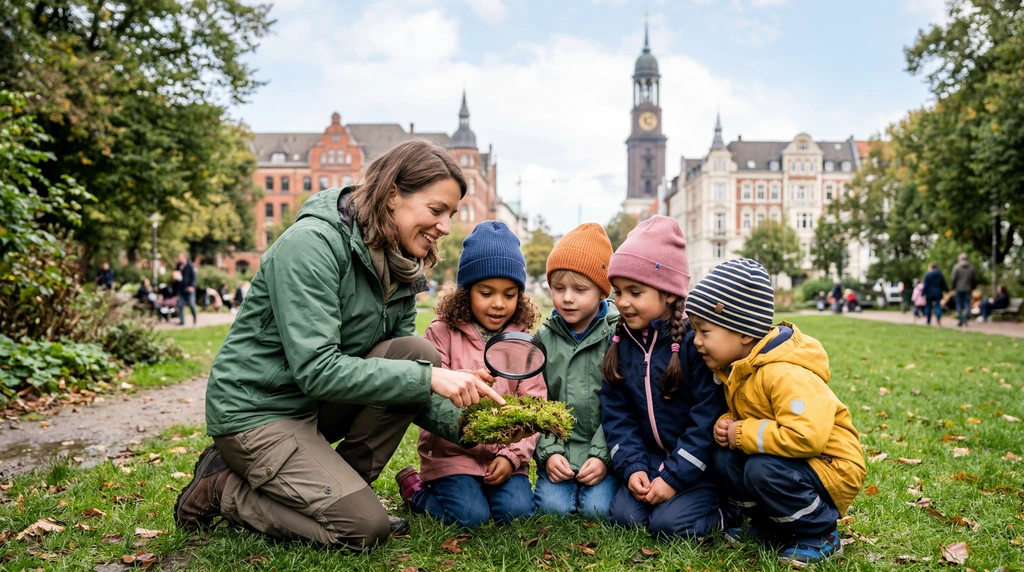
In short: In Hamburg’s kindergarten stage (the elementary years, ages 3–6), much of what later counts as school readiness is shaped. Strengthen your child’s resilience through outdoor pedagogy and purposeful pre-school practice.
🧭 Navigation & terminology
Contents:
- Why it matters
- Types of pre-school provision compared
- Step-by-step: The bridge year
- Perspectives, myths & expert check
- Strategic pros & cons
- FAQ & decision support
Key terms:
- Elementary pedagogy (Elementarbereich): The academic and practical field of education for children aged 3–6, treating kindergarten not as “babysitting” but as a first educational setting.
- Bridge year (Brückenjahr): The key year before school entry when the move from kindergarten to primary school is supported—through programmes in the Kita, at school, or both.
1. Why kindergarten in Hamburg matters more than ever
Moving from nursery (Krippe) to kindergarten is a major step. In the elementary phase (ages 3–6), cognitive, emotional, and social foundations for later school readiness are laid. For Hamburg families, choosing a setting means balancing city life with holistic development. A serious kindergarten in Hamburg today goes far beyond “watching the children”; it follows Hamburg’s official guidelines for education in daycare and works as a professional learning environment where children grow through rich experiences.
Trends in elementary pedagogy
Hamburg’s Kita landscape is changing deeply: away from rigid craft slots, towards real participation—children help shape their day. Learning in and with nature is central; in the city, children still grasp complex ecology through direct experience in parks and green pockets. Digitisation is changing quality work too: portfolio approaches document each child’s learning journey transparently for parents—supporting genuine partnership on equal terms.
Kindergarten in Hamburg: For kindergarten in Hamburg, Stadtküken runs 11 daycare centres across the city. Each site links an urban location with direct access to nature—forest edge, next to a park, or generous gardens. We aim to give every child a protected space for individual growth, mindfulness, and time outdoors. All locations for kindergarten in Hamburg
2. Types of pre-school provision compared
Hamburg has a nationwide peculiarity: in the year before school, parents can choose between different pre-school routes. The table shows common models.
| Model / type | Focus / audience | Main advantage | Complexity |
|---|---|---|---|
| Kita pre-school (regular Kita) | Children stay in a familiar Kita | Emotional safety, smoother transition | Low |
| School-based pre-school class (VSK) | Children who should get used to “school” early | Spatial and structural fit with school routines | Medium |
| Nature Kita with pre-school profile (e.g. Stadtküken) | Families wanting resilience and ecology | Social skills through nature, high individuality | Medium |
3. Step by step: The bridge year process
Planning the elementary years—and especially the school transition—helps your child start school calmly and confidently.
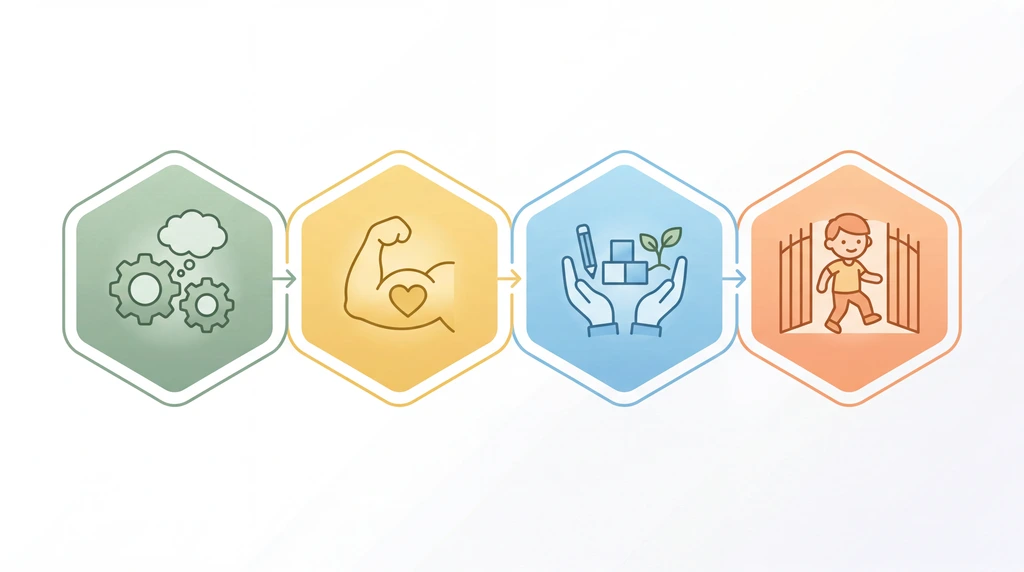 Caption: From entering the elementary phase to successful school start—a practical thread for educators and families.
- Bridge year quick checklist:
- Development talk held (including portfolio insight)
- Local primary VSK deadlines checked
- Hamburg Kita voucher confirmed for the pre-school year
- Decision & fit (ages 4–5): With your current educators, review your child’s development. Do they thrive in a familiar setting, or do they already need a more “school-like” frame?
- Resilience & social skills: Modern elementary pedagogy prepares children through character and social learning, not by drilling letters. Check that your kindergarten lives participation—so your child practises naming boundaries and tolerating frustration (resilience).
- The active bridge year: In nature Kita or pre-school class, fine motor skills (scissors, pens), early number sense, and phonological awareness are built in age-appropriate ways.
- School transition: With the team’s support, children move gently into Year 1. Structured documentation from kindergarten often helps primary teachers.
Hamburg pre-school deadlines: The choice between Kita pre-school and school pre-school class (VSK) must often be made more than a year before regular school entry (usually in the autumn of the previous year). Don’t miss the registration deadline—places in VSK at popular primary schools are limited.
4. Perspectives, myths & expert check
Around “readiness for real life”, parents often hear oversimplified advice.
Approaches in practice
- Academic-heavy: Some settings push early reading and writing. That can overload children.
- Holistic: Many experts favour executive functions through free play and nature. A child balancing on uneven ground in a wood is building neural patterns that later support maths too.
Myth vs. fact
❌ Myth: True school readiness means my child can write their name and count to 20 before school.
✔ Fact: Cognitive tricks are secondary. Under Hamburg’s guidelines, readiness is social–emotional: coping with conflict, dressing independently, listening. Resilience is the real key.
❌ Myth: Deep outdoor pedagogy in a big city like Hamburg is unrealistic.
✔ Fact: Innovative centres use urban biotopes, parks, and allotments. Seasons, weather, and plants in the city can sharpen observation just as strongly as a remote forest.
5. Strategic pros & cons of a strong profile (e.g. nature Kita)
We weigh what a profiled centre means so you can decide for your child.
✅ Advantages:
- High pedagogical quality: Specialist teams with a clear concept often offer deeper support than generic settings.
- Health & motor skills: Daily movement in urban green space supports immunity and gross/fine motor skills—important for later writing.
- Transparent development: Digital quality tools (e.g. portfolio) keep you close to your child’s progress.
❌ Challenges:
- Logistics: Profile Kitas are not always walking distance from home.
- Kit: A nature Kita in Hamburg needs proper all-weather outdoor clothing—an extra cost.
💬 Expert voice: “Kindergarten must never be reduced to a ‘waiting room’ before school. It is a complex educational setting. If we strengthen social skill and resilience through nature in the city, we give children tools for life.” – Arianne Vogt
FAQ: Kindergarten in Hamburg
What is better: Kita pre-school or school pre-school class (VSK)? There is no one-size-fits-all “better”. Kita pre-school keeps a safe, known frame—often better for sensitive children. School pre-school practises the 45-minute rhythm and a large playground earlier. Decide from your child’s maturity.
Can “city kids” really understand nature? Yes. A professional nature Kita uses the city as a teacher: chestnut trees in the park or puddles teach physics, biology, and cause and effect as well as a distant forest—with skilled adults alongside.
How does the portfolio method show my child’s progress? The portfolio (often digital) collects art, project photos, and learning stories (quotes from the child). It highlights strengths and steps forward—not deficits—and stays transparent for parents.
👤 About the author
Arianne Vogt is a member of the press team at Stadtküken (Die Natur-Kita) in Hamburg. She prepares editorial content on early childhood education, outdoor pedagogy, and everyday Kita life, with a focus on clear language, practical relevance, and professional consistency.
Editorial note: This article has been reviewed for accuracy against Hamburg’s school and daycare framework.
Sources & further reading
- Hamburg guidelines for education and upbringing of children in daycare (Senate authority for labour, social affairs, family and integration)
- The bridge year in Hamburg: framework for pre-school work (Senate authority for schools and vocational education)